Velora Pest Control ServiceVelora Pest Control Service

Bed Bug Treatment

Bed bugs travel on luggage, backpacks, and secondhand furniture, which is why the calls cluster where people move often. In the Donnell Drive apartment blocks and the garden-style buildings off Silver Hill Road, shared…
Call (227) 269-4830 →(227) 269-4830
Bed Bug Treatment in District Heights, MD
Quick answer
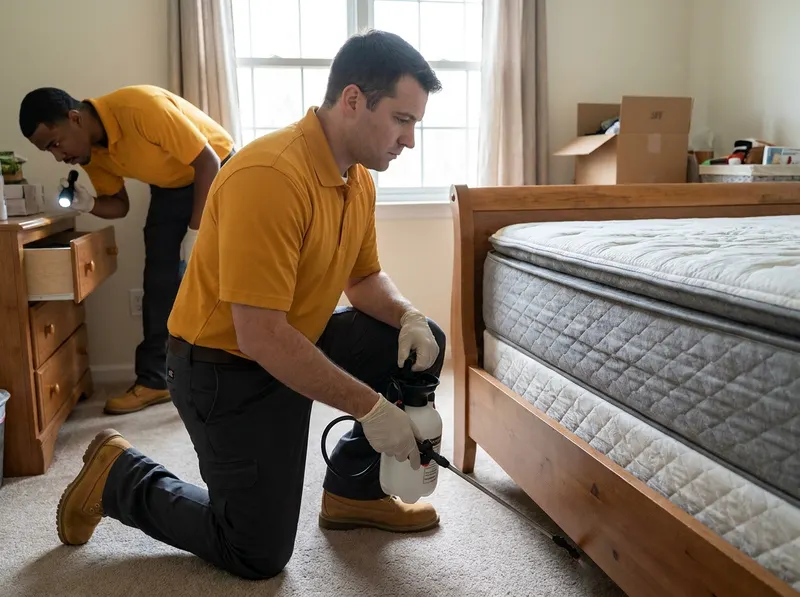
  • What's included: room-by-room inspection of mattress seams, box spring corners, headboard bolt holes, couch tufts and baseboard edges; species confirmation; a written map of active rooms; a labeled treatment plan; and scheduled follow-up visits.
  • How fast: inspections in District Heights are usually scheduled within 1–2 business days, and first treatment often happens the same visit if a prep checklist is already done.
  • What it costs: bed bug jobs start at a $250 minimum and commonly run $250–$1,600 depending on how many rooms show live activity — a ballpark until an inspector counts the rooms on site.
  • What we take: cash, card, check, and per-unit invoicing for landlords and small multifamily managers in Prince George's County.
  • How to book: call (227) 269-4830 for a free on-site bed bug inspection in District Heights; discretion is standard and nobody needs to know why a vehicle is parked outside.

Bed bugs travel on luggage, backpacks, and secondhand furniture, which is why the calls cluster where people move often. In the Donnell Drive apartment blocks and the garden-style buildings off Silver Hill Road, shared walls and stacked units mean an infestation in 201 can feed a reinfestation in 301 through the wall void behind a shared plumbing chase — so an inspection there always includes a look at the adjacent and above/below units when access allows. Near Joint Base Andrews, PCS moves and stored furniture bring bugs in from somewhere else entirely. Along the Marlboro Pike corridor and around Penn Mar Shopping Center in Forestville, the common story is a curbside or secondhand mattress or sectional that came home already carrying an established population in the seams.

The first decision is scope: single-room targeted treatment versus whole-home. Targeted works when evidence is confined to one bedroom, the resident hasn't been sleeping on the couch, and no one has been moving bedding between rooms. Whole-home is the honest call when there's staining in two bedrooms, bites on more than one person, or a family member who has been sleeping in the living room to escape the bites — because bed bugs follow the sleeping human, not the bedroom. Choosing targeted to save money and then finding activity in the den six weeks later costs more than treating the real footprint the first time.

The second decision is method, and the trade-off is speed versus disruption. Conventional multi-visit programs use labeled products applied to harborage — mattress and box spring seams, bed frame joints, furniture voids, carpet edges — with follow-ups roughly 10–14 days apart to break the egg cycle, because eggs are not reliably killed by residual product. Two to three visits is the normal course. Whole-room heat approaches are faster to resolve but require more emptying, more preparation, and higher cost. Aerosol foggers and store-bought bombs make bed bug jobs worse by scattering bugs into wall voids and neighboring rooms, and a fogged home is usually a bigger job than an untreated one.

Safety questions get direct answers here: every product used is discussed by label before application, including re-entry and drying times, and treatment is planned around a toddler's crib or a dog's crate rather than around a spray schedule. Prep matters too — laundering and drying bedding on high heat, bagging clean items, and clearing the floor perimeter — and District Heights residents get the checklist in writing, not verbally at the door. Mattress and box spring encasements are recommended on nearly every job because they trap what survives in the seams and make future inspections readable in seconds.

Landlords and small property managers around the Marbury Drive municipal center area and Walker Mill often need documentation, not just a spray: a dated findings sheet per unit, evidence of follow-up, and a clear statement of what was treated. That paperwork is part of the job. Verification is the last step — a follow-up inspection with no live bugs, no fresh staining, and no new bites before a file is closed.

What it costs

Bed bug inspection with written findings (District Heights)Free on-site
Single-room targeted treatment program (includes follow-ups)$250 – $500
1–2 bedroom apartment or condo, full program$450 – $900
3–4 bedroom single-family home, full program$900 – $1,600
Additional adjoining rental unit treated same dayfrom $250 per unit
Mattress and box spring encasement setFrom $250

Every job gets a firm, written price after a free on-site visit.

Common questions

How much does bed bug treatment cost in District Heights?
Bed bug work in District Heights starts at a $250 minimum, with single-room programs commonly $250–$500 and whole-home programs for a 3–4 bedroom house running $900–$1,600. Those are ballparks tied to how many rooms show live activity; the exact figure is confirmed during the free on-site inspection, and follow-up visits are quoted inside the program rather than added later.
How many visits does a bed bug job in District Heights usually take?
Most District Heights bed bug programs run two to three visits spaced about 10–14 days apart. The spacing exists because eggs are not reliably killed by residual product, so the second visit targets newly hatched nymphs before they can feed and reproduce. A job is only considered finished after a follow-up inspection finds no live bugs and no fresh staining.
Do neighboring apartments need treatment in District Heights buildings?
In multifamily buildings around Donnell Drive, Silver Hill Road, and the Suitland edge, adjacent units are inspected whenever access is granted, because bed bugs move through shared wall voids and plumbing chases. Treating one unit while an untreated unit sits next door is the most common reason a District Heights tenant sees bugs again a month later. Landlords receive a per-unit findings sheet so the decision is documented.
Is bed bug treatment safe around children and pets in a District Heights home?
Every product used in a District Heights bed bug treatment is applied according to its label, and the label, drying time, and re-entry window are explained before anything is applied. Cribs, toddler bedding, and pet crates are handled as part of the plan — bedding is laundered rather than sprayed, and pets are kept out of treated rooms until surfaces are dry.
What should I do before a bed bug visit in District Heights — and should I throw out my mattress?
Do not throw out the mattress before the inspection. Most District Heights bed bug jobs keep the mattress and use an encasement, which is cheaper than replacement and prevents a new mattress from being reinfested by bugs still living in the frame or headboard. Prep is simple and provided in writing: launder and high-heat dry bedding, bag the clean items, clear the floor along the walls, and skip the store-bought fogger — foggers scatter bugs and enlarge the job.

Ready to get started?

Tell us about your bed bug treatment job in District Heights and we'll send a clear, written quote — usually the same day.